We will be using this site a lot for assignments and class work so you should check here first if you've missed anything. The highlighted text will help you with answers to the questions.
- Without looking at your work from last lesson, draw a type of microorganism (either a prokaryote, eukaryote or akaryote) as accurately as you can. We will be looking at this again at the end of the lesson, so don't worry if you aren't sure about anything!
- What are the seven characteristics of living things?
- Use this link to give the size of a skin cell, a hepatitis virus and an E. Coli bacterium (use the scale at the bottom). Extension - How many phospholipids could you line up end to end in 1 metre?
- Give two main differences between eukaryotic and prokaryotic cells.
- Give the functions of three different organelles found in eukaryotic (plant or animal) cells:
- Ribosomes are structures found in both eukaryotes AND prokaryotes (shown here as green dots). What is their main function in the cell?
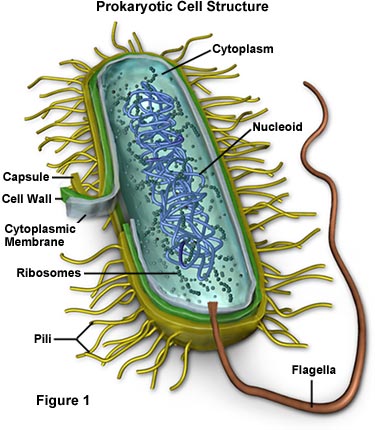
- Watch this video, outlining one way that microbes can help us, as well as one way they can harm us.
- What percentage of cells in our bodies are bacterial (i.e. other things living inside you) ?
- Read this article about toxoplasma gondi, a parasite that lives in cats and rodents. How does it pass from one to the other? Do all bacteria function very simply?
- How is agar used in microbiology? what problems did it solve?
- Based on what you've looked at this lesson, use a coloured marker to change or add anything to your diagram from question 1. Try and include as much infomation as you can.
- Read the rest of this article from question 8 and summarise two things you didn't know about bacteria before. Why might some bacteria not be able to grow in lab conditions?
- Extension - read this article and explain the theory of endosymbiosis, giving a definition and evidence to support the theory.

No comments:
Post a Comment