- Watch part of this documentary. In which ways are maggots and flies similar to Bacteria? (The section you need to see is at about 35 minutes).
- This is the decay documentary that we saw earlier in the year. What are slime moulds? (Go to about 1 hour to find out).
- In what ways do viruses depend on host cells to become reproduced? Try and name more than 1:
Thursday, 20 December 2012
End of term summary
Today we're going to summarise what we've been looking at so far with a couple of videos. Watch these and make notes on the following:

Thursday, 13 December 2012
Classifying micro-organisms
Today we're going to be looking at how micro-organisms can be classified. Answer the following in your books:
- What two systems for classifying viruses exist?
- Briefly describe the characteristics of each of the seven groups in the Baltimore system:
- Are fungi plants or animals, or something different? Explain why.
- Use the picture below to describe what an antigen is and where it is located. Are they the same or different for different species?

- How many different types of bacteria are there thought to be in the world? Why is it hard to get an accurate estimate?
- Watch this video about avirus getting into the body. Briefly outline the different steps required for a virus to infect someone, starting with the first man sneezing.
- What characteristics and tests are used to classify species of Bacteria?
- Use these search results (or do your own at the new scientist page) to find an article about microbiology. Summarise it and explain how it is relevant to the course.
- Finally, try any of the activities here and explain how they relate to microbiology:
Friday, 7 December 2012
Assignment 2 write ups
Today we're going to finish off the second assignment, which can be found on the shared area. Make sure you've included relevant information under each heading, and have included photos wherever appropriate.
If you finish early and have other subjects to work on, feel free to do so.
If you finish early and have other subjects to work on, feel free to do so.
Thursday, 25 October 2012
Today we're going to watch a video that fits in well with the cells assignments you've done so far.
Watch this video, writing down three things that you didn't know about the cell before as you do.
If you finish that, try this activity. It's related to the microbiology stuff we've been doing. How many ways are there that pathogens (disease causing organisms) can be spread?
Monday, 22 October 2012
Assignments and microbiology in industries
Today we'll either be finishing (and hopefully printing) our assignments, or working on the question below.
- Explain how fermentation occurs and what the chemical reaction for it is:
- What industrial uses are there for microbes? List three different ways organisms can be used:
- For the uses listed above, briefly summarize what role the microbes play and what their requirements are - nutrition, conditions etc. You may need to find some more information to complete this task.
- Watch this video. Why would using aseptic technique be important in cheese production?
5. Explain what pasteurization is. Why would it be important for this to occur?
Thursday, 20 September 2012
MIcrobiology
Today we're going to keep working on the microbiology section of the course, ready to start the assignment next week. Answer the following questions in your books:
- How often do bacteria replicate?
- For the link above, how many cells can be produced from 1 original cell in 8 hours?
- What problems are caused by Campylobacter jejuni? Where does it come from?
- What are some limiting factors which determine how fast bacteria grow? You need to go through three pages here and look for the red headings.
- What does an antibiotic do?
- How many different shapes can bacteria take? What is the name for the long, spiral shaped bacteria?
- Watch the video below, and use this link to explain how penicillin was discovered. What is it used for?
- How can bacteria affect your health in this article?
- What other health problems can staphylococcus bacteria cause?
- Gram staining is one way of telling bacteria apart, and involves a colour test which uses parts of the cell walls. Give one difference between gram + and gram - bacteria.
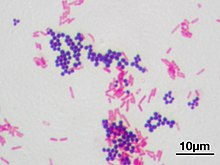 |
| Gram positive cocci are blue, Gram negative bacillus are red/pink. |
11. Play the activity here. What issues are there for the white blood cells in finding the pathogens
12. Finally, try this activity and think about how the pathogen (you!) is being transferred from person to person, or country to country.
Tuesday, 18 September 2012
Thursday, 12 July 2012
Microbiology
Today be will be looking at different aspects of microbiology. First of all, make sure you save this address somewhere - in your phone, planner, favourites folder - so you can access it when you need to.
We will be using this site a lot for assignments and class work so you should check here first if you've missed anything. The highlighted text will help you with answers to the questions.
We will be using this site a lot for assignments and class work so you should check here first if you've missed anything. The highlighted text will help you with answers to the questions.
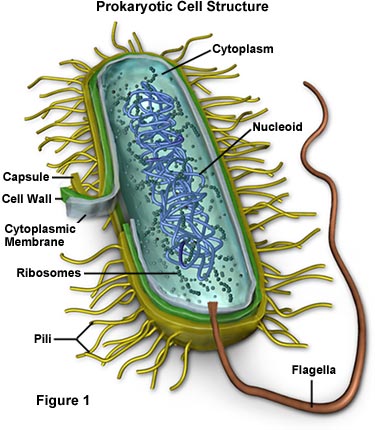
- Without looking at your work from last lesson, draw a type of microorganism (either a prokaryote, eukaryote or akaryote) as accurately as you can. We will be looking at this again at the end of the lesson, so don't worry if you aren't sure about anything!
- What are the seven characteristics of living things?
- Use this link to give the size of a skin cell, a hepatitis virus and an E. Coli bacterium (use the scale at the bottom). Extension - How many phospholipids could you line up end to end in 1 metre?
- Give two main differences between eukaryotic and prokaryotic cells.
- Give the functions of three different organelles found in eukaryotic (plant or animal) cells:
- Ribosomes are structures found in both eukaryotes AND prokaryotes (shown here as green dots). What is their main function in the cell?
- Watch this video, outlining one way that microbes can help us, as well as one way they can harm us.
- What percentage of cells in our bodies are bacterial (i.e. other things living inside you) ?
- Read this article about toxoplasma gondi, a parasite that lives in cats and rodents. How does it pass from one to the other? Do all bacteria function very simply?
- How is agar used in microbiology? what problems did it solve?
- Based on what you've looked at this lesson, use a coloured marker to change or add anything to your diagram from question 1. Try and include as much infomation as you can.
- Read the rest of this article from question 8 and summarise two things you didn't know about bacteria before. Why might some bacteria not be able to grow in lab conditions?
- Extension - read this article and explain the theory of endosymbiosis, giving a definition and evidence to support the theory.
Subscribe to:
Comments (Atom)